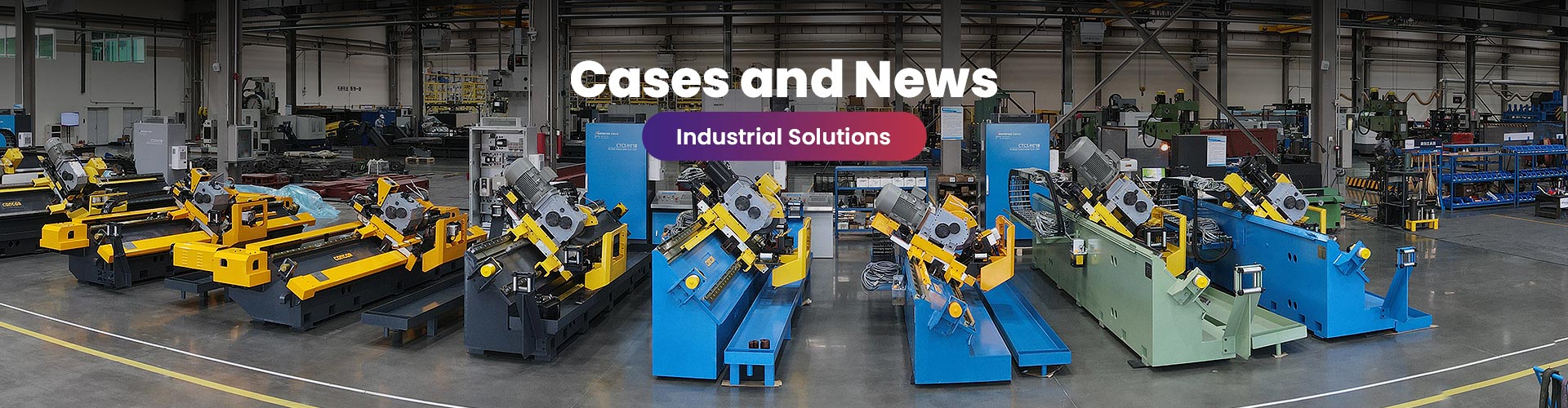
As CONTOR's innovative new product, the laser flying saw has already been deployed in numerous manufacturing plants.
Unlike traditional cold flying saw, it completely eliminates the need for blades, reducing production costs and material waste.
The laser flying saw is a new-generation online welded pipe cutting equipment developed by CONTOR, representing a significant upgrade in online cutting technology. Compared to traditional cold flying saws, the laser flying saw offers several distinct advantages. This article elaborates on the differences between laser flying saws and cold flying saws, helping you better understand the features of both.
1. Cutting Method & Consumables
The laser flying saw achieves a major innovation in the cutting process. Cold flying saws rely on saw blades for cutting, which are expensive and constitute a major consumable cost in production. To address this issue, CONTOR’s engineers successfully developed the laser flying saw, which uses laser for cutting. This reduces consumable usage, significantly lowering production costs for pipe manufacturers. Particularly when cutting pipes with hard material or small thickness, cutting with blade can cause big consumption of the blade or the deformation of the pipe, while the non-contact nature of laser cutting completely avoids this risk, minimizing damage to the pipe and lowering the production cost.
2. Clamping System
Cold flying saws require changing clamps to accommodate steel pipes of different shapes and sizes. This not only increases production costs but also consumes time for the clamp replacement. In contrast, the laser flying saw employs a universal clamp, eliminating the need for frequent changes and effectively reducing equipment downtime.
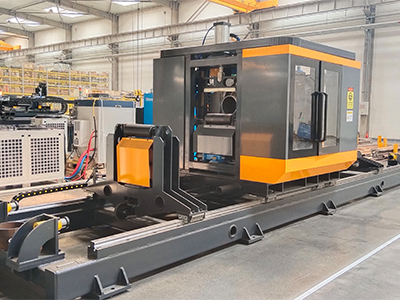
3. Energy Consumption
Laser flying saws are more energy-efficient. Cold flying saws have many motors, leading to substantial electricity consumption during operation. Laser flying saws operate at lower power levels, contributing to further savings in production costs.
4. Cutting Quality & Material Savings
Laser flying saws produce a narrower cut width. The blades of cold flying saw result in a wider width and greater material loss due to wear. Laser flying saw works by melting the material, resulting in minimal material loss and a more narrow width, which leads to savings on raw materials.
5. Noise Level
The operational noise of a laser flying saw is considerably lower than that of a cold flying saw. This makes laser systems a more suitable and friendly option for factories located near residential areas or with strict noise regulations.
6. Mechanical Structure & Maintenance
The mechanical design of the laser flying saw is simpler compared to the cold flying saw. This simplicity leads to a lower failure rate and easier maintenance.
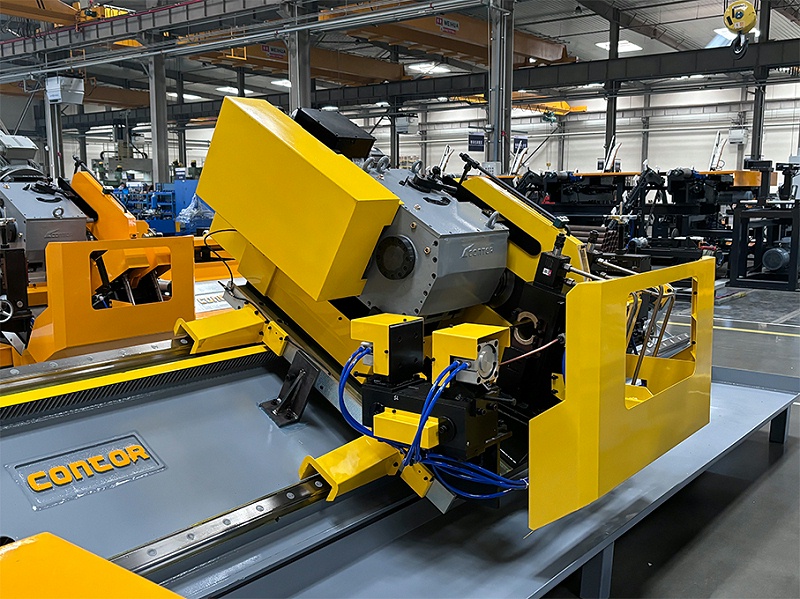
Conclusion
In summary, the laser flying saw offers clear advantages over the traditional cold flying saw. Therefore, when considering online cutting equipment for your welded pipe production line, the laser flying saw presents an excellent and forward-thinking choice.
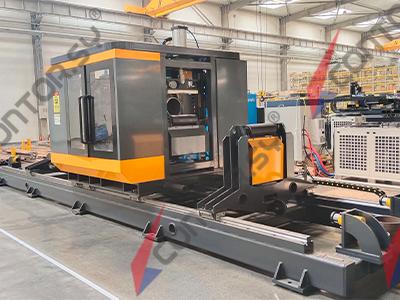
Shenyang Contor's laser flying saw is used without saw blades, with smooth and burr-free tube cutting quality, which greatly saves the customer's production costs.

Contor flying saw system for friction saw machine control.
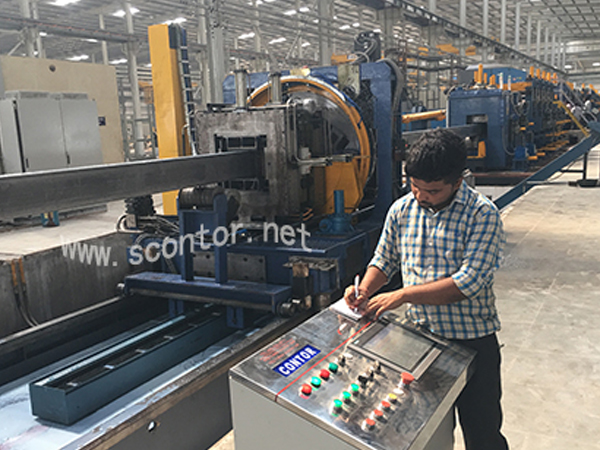
1.high precision & high EFT 2.response quickly & well synchronism 3.PLC to operate I/O, deep extension and simple wiring.

Copyright@2025 Shenyang Contor Mechanical & Electrical Equipment Co., Ltd. All Rights Reserved



 Phone:+86 18840643547
 Email:flyingsaw@scontor.net
 WhatsApp:188-4064-3547
 Address:
No.6 HunHe 21 Street, TieXi District, Shenyang, China
Address:
No.6 HunHe 21 Street, TieXi District, Shenyang, China
 flyingsaw@scontor.net


